Elena Verna published a post this month calling individual contributor work the new career flex. She's right. It is. But the flex isn't new. The system catching up to it is.
There has always been a category of person who is unusually good at the work itself, at building, designing, writing, selling, shipping, and who has no interest in managing other people doing it. Elena calls this the "HI-IC". High-impact and individually compounding. The reason they've been a rarer sight than they should be is not because we didn't have AI to compound their impact, it's because for decades the only real career path that paid like the work mattered funneled people into the narrow path of management and everyone else hit a ceiling.
The HI-IC was always there. The system wasn't built for them.
The Peter Principle gets cited a lot for what happens at the individual level: someone good at the work gets promoted into work they're bad at. Less often discussed is what it means at the company level. When the only legitimate promotion path runs through management, you systematically promote your best operators out of the work they were best at, and you replace them with whoever was next in line. The result is a senior layer staffed by people who were once excellent ICs and are now competent-at-best managers, with no path to walk that back without a perceived demotion.
Most companies that describe themselves as flat are not actually flat. They have a few IC levels with a low ceiling and many manager levels with a much higher one. Functionally, that's a single track wearing two costumes. The IC option exists on paper. In practice, advancement and higher income means hiring direct reports.
This is the structural failure that produced the conditions Elena is naming. The HI-IC has always been the more interesting career for a large class of operators. The system simply refused to reward it as such.
Management isn't going away. The job is changing.
The argument is not that managers stop being necessary. Knowledge work is collaborative by definition, and somebody has to make sure the work fits together, that priorities don't quietly diverge across teams, that standards hold, that people develop. Coordination, coaching, and judgment under ambiguity are real labor. They are not going away because some of this gets automated.
What is changing is the ratio. The parts of management that were actual management (developing people, making decisions that require taste and context, holding the line on quality) were never the parts that filled a manager's calendar. The parts that filled the calendar were administrative scaffolding: status meetings to gather information already written down somewhere, performance reviews compiled from selective memory, calibration spreadsheets built by hand, approval queues that existed because the cost of trying anything was high enough to require pre-justification.
Those tasks were never the craft of management. They were the overhead. If we strip them out, and train managers to do manager work, that job does need fewer people. But it needs them at full strength, with their attention spent on the parts that compound, increasing organizational outcomes through people.
The shift is happening from the bottom up
The reason this hasn't changed sooner is because the system worked just well enough for the people who designed it and benefited from it. Management has been the prestige track for a century. Status, comp bands, management titles, executive visibility: everything that signals senior altitude has been built on the assumption that managing a team is what senior people do. Asking a company to genuinely flip that requires rewriting a lot of cultural code that works fine for the incumbents.
The shift is happening so fast it's coming from the bottom, not the top. AI has disrupted the structure underneath seemingly overnight. And the role of manager and IC are both evolving, fast.
For ICs, AI is collapsing the gap between what one person can do and what used to require a team. AI-native companies are seeing average revenue per employee closer to $2.5M, versus the $250K at conventional SaaS organizations. That isn't a productivity gain. It's a categorical change. The HI-IC is no longer a quiet bet a company makes on a senior specialist. They're a measurable, defensible economic unit whose output compounds visibly inside the business. Companies without a way to recognize and reward that work will see their best operators leave for places that do.
For managers, AI is doing the inverse work. It is finally taking the administrative scaffolding off the calendar: the meeting notes, the status updates, the constant update requests, the monitoring of who is working on what, the reviews that are avoided and take hours to complete via selective memory. The overhead that used to crowd out the manager-craft is what AI is best at handling. What's left is the work managers were always meant to do, with the headspace to do it well.
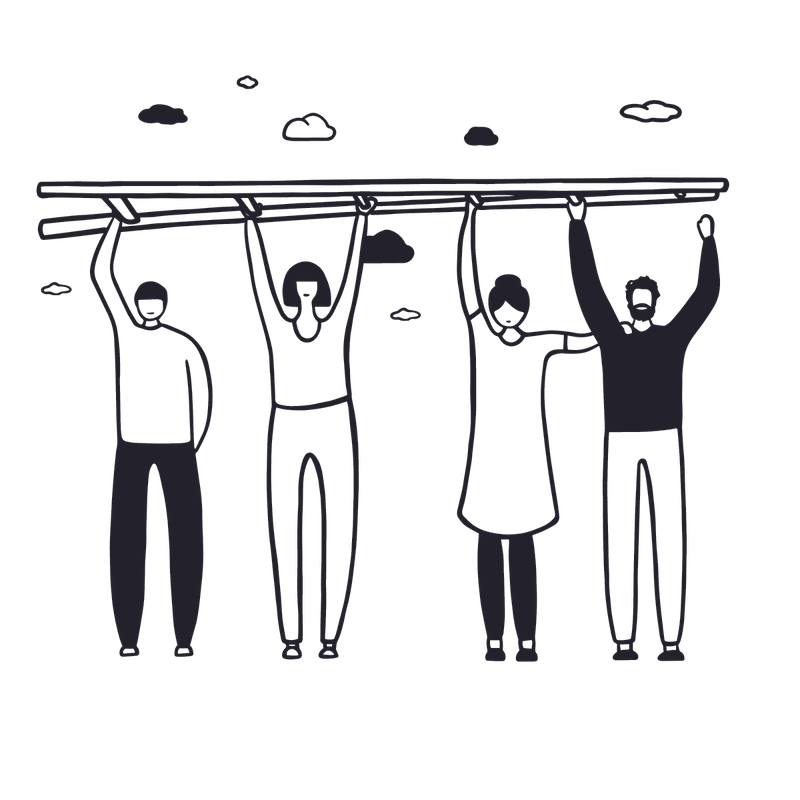
The unlock isn't only that ICs can finally have a long path of advancement and the higher pay associated with it, but that folks on both sides of the ladder are experiencing the shift at the same time. ICs are seeing their leverage compound. Managers are seeing their job clarify, and fewer managers mean the ones left standing can fully step into that role. And culture follows the work, eventually. "Manager" becomes a role that is not better or more valued than an IC role, but a different one, as it always should have been.
Now, two tracks, equally weighted
The right end state isn't a world without managers. It's a world where the IC track and the manager track are operated as two genuinely separate paths, with their own competencies, their own progression rules, and their own pay ranges where level parity also equals pay parity.
Leveling up as an IC happens when you are sustainably doing the work of the next level, not when a management role happens to open. The senior engineer is compensated like the senior engineering manager. Nobody finds that strange. And the people who do choose management are there because they are excited about the work of managing, not because it was the only step on the ladder that paid.
The result is that the HI-IC stops being a flex in the sense of a rare survival path. It becomes the default for the majority of people who never wanted to manage and never should have in the first place. And the manager track gets stronger, because the people on it actually chose it, are trained for it, and can compound the impact of their people.
That is a better operation. It is a better deal for the individual. It is a better deal for the company, because it stops paying for people performing a role they didn't really want and weren't suited for. And it is the version of work AI is finally making operationally possible.
Where Aspen fits in
Aspen is built for the version of performance management this requires. It reads the feedback, recognition, and coaching already happening in Slack, and turns raw signal into something a manager can act on the same week: 1:1 prep, draft reviews, calibration cues, a clear picture of who is operating at the next level and who may need more support.
The reason that matters here: two real tracks only work if you can calibrate performance continuously. The more bottom-up the org, the more distributed the work, the more critical alignment becomes: understanding the actual impact and outcomes of work, and adjusting as needed. Aspen is the operating layer that keeps managers and ICs aligned on impact, without the performative ritual of traditional performance management.
The HI-IC was always a flex. The system is being redesigned to recognize it.